



















From Beginner to Pro: A Comprehensive Jump Rope Progression Program

From Beginner to Pro: A Comprehensive Jump Rope Progression Program
Jump rope is one of the most versatile, affordable, and effective tools for fitness. It builds cardiovascular endurance, coordination, foot speed, and core stability—all in a compact package you can carry in a backpack. If you’re new to rope training, the prospect of “getting good” can feel intimidating. But with a structured progression, consistent practice, and a focus on technique, you can move from basic single-rotation jumps to advanced skills like double unders, crossovers, and even speed sequences without burning out or getting discouraged. This guide lays out a 16-week progression designed to take you from beginner to proficient jumper, with clear weekly goals, drills, and progression cues you can follow at your own pace.
Before we dive in, a quick note on safety and equipment. Choose a rope length that suits your height, wear supportive footwear, and jump on a firm surface to protect your ankles and knees. As you progress, prioritize technique over speed. Quality reps beat fast, sloppy reps every time. If you have any medical concerns or prior injuries, check with a healthcare professional before starting a new exercise program.
Why jump rope? The benefits at a glance
Jump rope delivers a potent mix of cardio, skill, and metabolic conditioning. It trains the small stabilizing muscles in the ankles and calves, improves rhythm and timing, and boosts neuromuscular coordination. A well-rounded rope program can:
- Improve heart rate variability and aerobic capacity
- Enhance footwork, agility, and balance
- Strengthen calves, shins, and core stability
- Provide a time-efficient workout—often 10–20 minutes can deliver a meaningful training stimulus
- Offer portable, low-cost practice that scales from beginner to elite levels
With the right progression, you’ll notice progress in weeks, not months. The key is consistent weekly practice and a plan that challenges you just enough to adapt without overloading you.
Choosing the right equipment: rope length, type, and setup
The rope and setup influence your comfort more than you might expect. Here’s a quick guide:
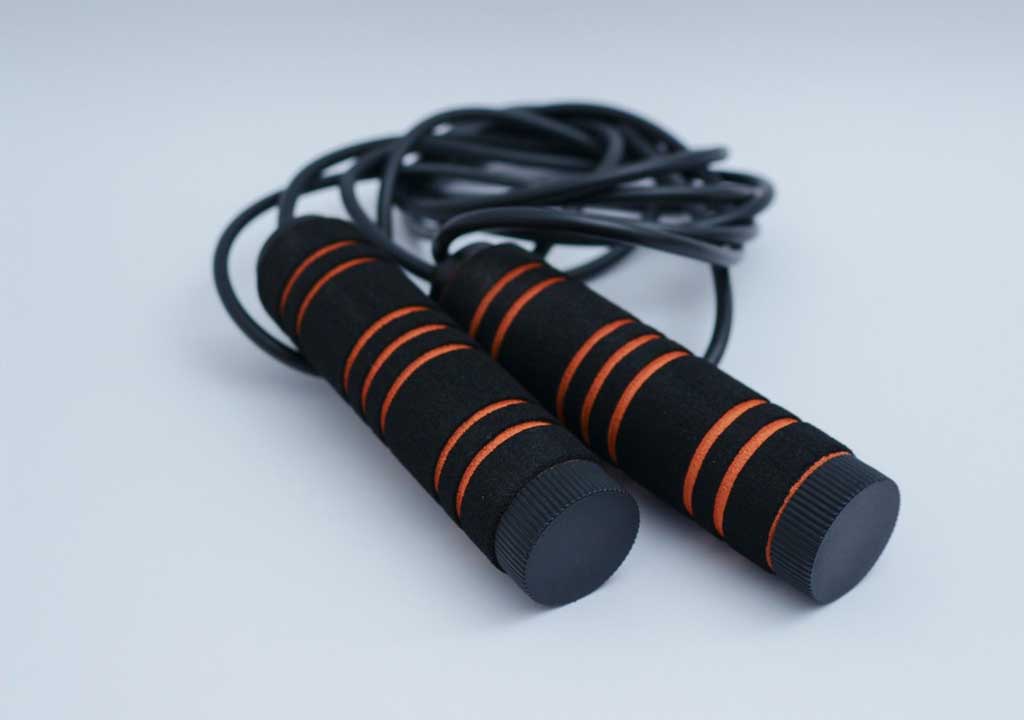
- Rope type: For beginners, a light, adjustable speed rope or a beaded rope can help you feel the arc of each rotation and reduce stumbles. As you advance, switch to a light-speed rope for higher reps and double unders.
- Length: Stand on the middle of the rope with handles hanging at about armpit to mid-chest height. A general guideline: rope length equals your height (in cm) multiplied by 0.8–1.0; typical beginner ropes range from 8 to 9 feet (240–270 cm) for adults. Adjust as needed so you can swing comfortably without tripping over the rope.
- Footwear and surface: Supportive athletic shoes and a flat, non-slip surface reduce impact. A wooden floor, rubber mat, or track surface works well. Avoid jumping on concrete without cushioning for longer sessions.
- Posture: Keep a tall spine, shoulders down and relaxed, elbows close to the body, and wrists doing most of the rotation.
With the correct equipment in place, you’ll experience fewer tripping incidents and more consistent reps—an essential foundation for progression.
Phase-based progression overview
The journey from beginner to pro is organized into four progressive phases, each lasting roughly 3–4 weeks, with built-in practice days and progressive skill targets. You’ll see a mix of technique drills, endurance work, speed work, and skill variety. You can run this as is, or tailor the weekly plan to your schedule. The emphasis in each phase is on quality reps, not simply volume.
Phase 1: Foundations (Weeks 1–3) — Learn the basic rhythm, develop comfortable stance, and build a steady endurance base. Target: 3 sessions per week, 5–12 minutes per session, focusing on proper form and light footwork. Primary outcomes: confident single-rotation jumps, improved cadence, and rhythm awareness.
Phase 2: Comfort and Endurance (Weeks 4–7) — Expand your repertoire to include alternate foot and basic box step patterns. Increase jump duration and reduce fatigue per set. Target: 3–4 sessions per week, 12–20 minutes, with longer continuous bouts and first attempts at simple variations. Primary outcomes: smoother transitions between steps and a stronger “swing” of the rope.
Phase 3: Speed and Precision (Weeks 8–11) — Introduce faster rotations, controlled doubles-under progressions, and basic crossovers. Target: 4 sessions per week, 15–25 minutes, with short intervals of faster jumping. Primary outcomes: improved tempo control, better footwork, and the foundation for advanced tricks.
Phase 4: Conditioning and Skill Variety (Weeks 12–16) — Add complex drills, longer rounds, and more advanced tricks. Target: 4 sessions per week, 20–30 minutes, including interval sets and a repertoire of skills. Primary outcomes: consistent double unders, crisp crossovers, and a versatile skill set that you can mix into workouts.
Each phase includes specific drills, sample sets, and progressions. Scroll down to the drill library for actionable exercises you can plug into these phases.
Warm-up and mobility: the non-negotiables
Before you jump, take 6–10 minutes to warm up and mobilize. A good warm-up primes the calves, ankles, hips, and shoulders, and reduces injury risk. A sample warm-up:
- Light cardio: 2–3 minutes of brisk marching, jogging, or jumping jacks
- Dynamic ankle circles and ankle alphabet drills
- Hip circles and leg swings (forward and sideways)
- Wrist circles and gentle forearm stretches
- Bodyweight movements: air squats, glute bridges, planks (30–60 seconds)
Finish with 1–2 minutes of rope-free jumps to tune your timing before you pick up the rope.
Drill library: build a toolbox for every phase
A strong progression relies on a toolkit of drills. Here are core drills, organized roughly from easier to more advanced. Use them to fill each phase of the progression.
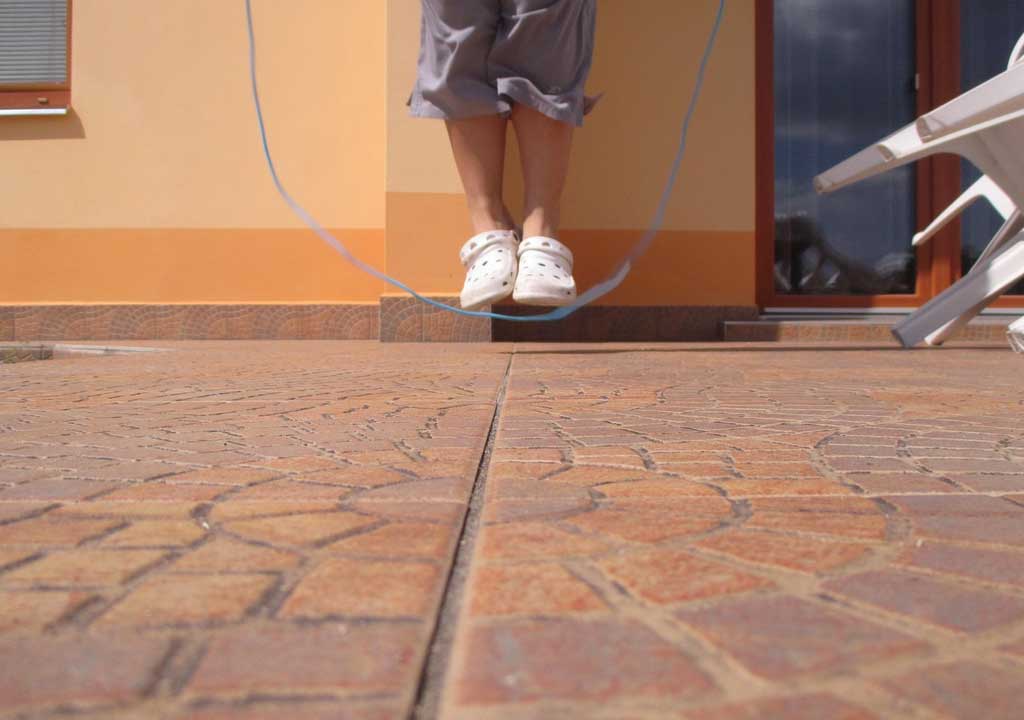
- Single-unders — Jump once per rope rotation, landing softly on the balls of the feet with a slight knee bend. Keep wrists relaxed and the rope close to your wrists.
- Alternating-foot (telescoped step) — Jump with one foot then the other as if running in place, keeping the rope moving in a steady arc.
- Box step (frog jump) — Step to the side with one foot, then bring the other foot to meet it, jumping softly on each touch.
- Side swing — Swing the rope to the side and pass it under one foot, then the other, staying light on your feet and maintaining rotation height.
- Backward rope — Jump with the rope passing behind you; this challenges coordination and spine alignment.
- High knee march — Lift knees higher with each step for a cardio boost while keeping a steady rhythm.
- Speed rope basics — Shorten ground contact time and increase tempo while preserving form; this prepares you for faster rotations.
- First double-under progression — Start with a tiny hop and attempt to pass the rope under twice before landing; use a slower rope or beaded rope to feel the arc clearly.
- Crossovers — Start with hands close to chest; cross wrists in front of you after every two jumps, then uncross to reset. Focus on smooth, controlled motion.
- Power singles and tempo intervals — Alternate between a burst of faster singles and a slow, controlled rep to build speed tolerance.
Tip: practice drills in short, focused blocks (2–4 minutes) with 1–2 minutes of rest between sets. This approach reduces fatigue and keeps technique crisp as you learn new skills.
Phase-by-phase drill plans: practical weekly templates
Below are practical templates you can follow for each phase. They’re designed to be flexible; adjust duration, number of sets, and rest to fit your schedule while maintaining good form.
Phase 1: Foundations (Weeks 1–3)
Goal: achieve comfortable single-unders, rhythm, and basic endurance. Frequency: 3 sessions/week. Duration: 8–12 minutes per session in week 1; build to 12–20 minutes by week 3.
Sample session structure per week:
- Warm-up: 6–8 minutes (dynamic mobility and light cardio)
- Drills:
- Single-unders: 3–5 sets of 20–40 seconds, 30–60 seconds rest
- Box step: 3–5 sets of 20–30 seconds
- Heel-toe taps or ankle mobility drills: 2–3 sets
Cool-down: 3–5 minutes of light stretching focused on calves, shins, and hips.
Phase 2: Comfort and Endurance (Weeks 4–7)
Goal: expand repertoire, increase continuous jump time, refine posture. Frequency: 3–4 sessions/week. Duration: 12–20 minutes per session, with longer continuous rounds.
Sample session structure per week:
- Warm-up: dynamic mobility and 2 minutes of light rope work
- Drills:
- Alternate-foot: 4–6 sets of 30–60 seconds
- Box step: 3–4 sets of 40–60 seconds
- Side swing: 3–4 sets of 20–40 seconds
- Short endurance round: 1–2 rounds of 60–120 seconds of continuous jumping
Cool-down: 5 minutes plus static stretching for calves, hips, and lower back.
Phase 3: Speed and Precision (Weeks 8–11)
Goal: introduce controlled doubles-under progressions, refine crossovers, work on tempo. Frequency: 4 sessions/week. Duration: 15–25 minutes per session, including short intervals.
Sample session structure per week:
- Warm-up: 8–10 minutes with mobility work
- Drills:
- Double-under progressions: 4–6 sets of 8–15 reps (or 20–40 seconds), with long recoveries
- Crossovers: 3–5 sets of 6–12 reps, focusing on clean wrists and minimal drama in the arc
- Tempo singles: 4–6 sets of 30–60 seconds at a brisk pace, with 60 seconds rest
Cool-down: 5–7 minutes of mobility and static stretching.
Phase 4: Conditioning and Skill Variety (Weeks 12–16)
Goal: build a diverse skill set and longer conditioning rounds. Frequency: 4 sessions/week. Duration: 20–30 minutes per session, with interval work and skill circuits.
Sample session structure per week:
- Warm-up: 8–10 minutes
- Drills:
- Double unders: 6–10 sets of 15–25 reps with short rests; aim for consistency
- Crossovers and in-front/back combos: 4–6 sets of 8–20 reps
- Box step or side-to-side steps: 4–6 sets of 30–60 seconds
- Interval finisher: 8–12 rounds of 20 seconds fast jumping, 40 seconds easy pace
Cool-down: 6–8 minutes of full-body stretching and breathing work.
Common mistakes and fixes
Even seasoned jumpers encounter common form slips. Here are frequent issues and how to address them:
- Jumping too high: Higher jumps waste energy and disrupt rhythm. Focus on small, quiet hops and let the rope pass under you. If you’re tripping, reduce the jump height and ensure the rope is the correct length.
- Arms flaring or excessive elbow movement: Keep elbows close to your body and wrists doing most of the work. Imagine your forearms as a low-friction hinge for the rope’s arc.
- Poor landing mechanics: Land softly on the balls of the feet with a slight knee bend. Avoid slamming heels or locking knees; it’s better to land quietly and reset quickly.
- Inconsistent tempo: Use a metronome or a simple cadence (for beginners, about 120–140 bpm) to keep a steady rhythm and prevent rushing.
- Poor rope setup: If the rope hits the ground often or the handles drag, recheck rope length, grip distance, and wrist motion. A shorter or longer rope may be necessary as you adjust technique.
Injury prevention and mobility work
Jump rope can stress ankles, shins, knees, and calves if technique or progression is off. Integrate these prevention strategies:
- Dedicated ankle mobility work: ankle circles, dorsiflexion stretches, and calf raises.
- Gradual progression: don’t rush into doubles or complex patterns before you’re comfortable with singles and basic footwork.
- Rest days and listening to your body: if you feel pain beyond typical workout fatigue, ease back or consult a professional.
- Strength work for the long term: calves, glutes, and core strength support jumping mechanics and reduce injury risk.
Balance, mobility, and strength complement rope work. A few short mobility sessions per week can meaningfully improve your progress and reduce downtime due to soreness.
Progress tracking: how to measure progress and stay motivated
Regular measurement keeps you honest about your progress. Consider these metrics:
- Consistency: number of sessions per week and total minutes jumped
- Cadence and correctness: can you maintain a steady tempo while performing drills?
- Skill milestones: ability to perform double-unders in a controlled manner, or to complete 30 seconds of continuous high-knee jumps without breaking form
- Endurance time: how long you can jump in a continuous, controlled pace without losing form
- Video logs: occasional recordings of your technique help identify subtle form issues and track improvements over time
Schedule quick checks every 2–3 weeks. Note what improves, what remains challenging, and which drills need more focus. This data keeps you oriented toward the long-term goals.
Sample 12-week calendar you can print or save
Here’s a concise, printable template you can adapt. It emphasizes three workouts per week, with a gradual increase in duration and variety. If you miss a session, simply pick up where you left off in the next available day rather than trying to cram everything in.
- Weeks 1–3 (Phase 1): 3 workouts per week; 8–12 minutes per session; focus on single-unders and rhythm; 1–2 sets of 60 seconds rest between drills
- Weeks 4–7 (Phase 2): 3–4 workouts per week; 12–20 minutes per session; add alternate-foot and box step; include 1 longer continuous jump block
- Weeks 8–11 (Phase 3): 4 workouts per week; 15–25 minutes per session; introduce double-under progressions; practice crossovers with controlled reps
- Weeks 12–16 (Phase 4): 4 workouts per week; 20–30 minutes per session; mix interval sets with skill circuits; aim for 1–2 solid double-under sets per session
Feel free to adapt the calendar to fit your schedule. The most important part is sticking to the progression, maintaining good form, and gradually pushing your boundaries in a controlled way.
Sample workouts for inspiration
Here are two example workouts from different phases to illustrate how you might structure a session. You can mix and match drills from the library above to your preference.
Starter session (Phase 1)
Warm-up: 6 minutes of light cardio and dynamic mobility
Drills (3 rounds):
- Single-unders: 30 seconds
- Rest: 30 seconds
- Alternate-foot: 30 seconds
- Rest: 45 seconds
- Box step: 30 seconds
- Rest: 1 minute
Cool-down: 5 minutes of stretching
Endurance and skill (Phase 3/4 focus)
Warm-up: 8 minutes
Drills (4 rounds):
- Double-under progressions: 6–12 reps
- Crossovers: 8–16 reps
- Tempo singles: 60 seconds at moderate feel
- Rest: 60–90 seconds between rounds
Finisher: 3 rounds of 20 seconds fast jumping + 40 seconds easy pace, total 2 minutes per round
Putting it all together: a simple 16-week plan you can follow
Week-by-week, you’ll do three to four rope sessions, with the first few weeks focused on technique and safe mechanics, and later weeks layered with speed and skill variety. Here’s a compact outline you can copy into your notes app:
- Weeks 1–2: Master single-unders and proper landing. 2–3 sets of 20–40 seconds, with 60 seconds rest. Add 1 longer round (60–90 seconds) by week 2.
- Weeks 3–4: Introduce alternate-foot. 3–4 sets of 30–60 seconds; add one longer continuous block (2–3 minutes total) across the session.
- Weeks 5–6: Increase volume. 4–5 sets of 40–60 seconds; 2 rounds of 90–120 seconds continuous jumping.
- Weeks 7–8: Begin basic box step and side swing patterns. 3–4 sets per drill; aim for 60–90 seconds for each.
- Weeks 9–10: Start double-under progressions and light crossovers. 4–5 sets of 8–15 reps; maintain good form.
- Weeks 11–12: Speed focus. Short intervals: 8–12 rounds of 15–20 seconds fast jumping with 30–40 seconds rest.
- Weeks 13–14: Build a routine of 2–3 skills in a session, 20–25 minutes total. Include 10–20 double-under attempts if comfortable.
- Weeks 15–16: Full routine with 1–2 solid double-under sets and 1 crossover circuit. Finish with a 5–10 minute conditioning block if feeling strong.
Adjust as needed. The aim is to progress steadily without sacrificing technique or comfort. If a week feels too taxing, repeat a lighter week before advancing.
Final thoughts: mindset, consistency, and play
Progress in jump rope training isn’t just about the number of reps or the speed you achieve. It’s also about consistency, thoughtful practice, and enjoying the process. Treat each session as an opportunity to learn something new—whether it’s refining your wrist motion, improving balance, or mastering a new skill. Small, consistent improvements compound into meaningful gains over weeks and months.
Set weekly micro-goals, like “today I’ll nail 2 sets of 20 seconds of double-under progressions” or “this week I’ll keep my shoulders relaxed for every rep.” Track your wins, not just your numbers. Celebrate successful form, improved endurance, and calmly approaching skills you once found intimidating.
With this comprehensive progression, you’re equipped to move from beginner to pro in a structured, sustainable way. The key ingredients are clear progressions, consistent practice, and a focus on technique. Keep your rope handy, show up ready to work, and enjoy the journey from first jump to impressive combinations and speed. Your future self will thank you for the time you invested today.
Want a quick recap?
- Start with proper rope length, safe form, and a gentle warm-up.
- Phase your training: Foundations, Endurance, Speed/Precision, and Conditioning/Variety.
- Build a toolbox of drills: single-unders, alternate-foot, box step, side swings, back rope, double-under progressions, crossovers.
- Progress with gradual increases in duration, complexity, and speed.
- Track progress, listen to your body, and adjust as needed.
- Finish with mobility and cool-down to support recovery and long-term consistency.
If you’d like, tell me about your current rope experience, available time per week, and any specific goals (e.g., double unders, longer rounds, or adding a routine for HIIT days). I can tailor the weekly plan and drills to fit your exact situation and create a personalized 8-, 12-, or 16-week progression for you.
LIKED THIS ARTICLE? SHARE IT: