



















Endurance and Agility: A Progressive Jump Rope Training Plan

Endurance and Agility: A Progressive Jump Rope Training Plan
Jump rope training is a timeless, portable, high-impact workout that builds cardiovascular endurance, foot speed, coordination, and agility. When approached with a structured, progressive plan, a simple rope can unlock gains that rival more elaborate cardio routines. This article outlines a complete, eight-week progression designed to develop both endurance and agility through jump rope work. You’ll find phase-by-phase guidance, weekly templates, drills, equipment tips, and practical tips to stay motivated and safe. Whether you’re training for a trail run, a basketball season, or simply seeking a more capable cardio routine, this plan can be tailored to your fitness level and goals.
Why jump rope for endurance and agility?
Here’s what makes the jump rope such a powerful tool for both endurance and agility. First, it challenges the cardiorespiratory system in a compact timeframe. A well-paced jump rope session can push your heart rate into the aerobic and even the anaerobic zones, depending on how you structure intervals. Second, rope work trains neuromotor control—your brain’s ability to coordinate movement with precise timing. The rope’s speed demands quick footwork, precise wrist action, and rapid rhythm adaptations, all of which transfer to sports that require sudden changes in direction, accelerations, and decelerations. Third, the activity is scalable. You can start with basic bounces and simple steps and, as you progress, introduce multi-directional jumps, tempo changes, or speed drills to push your limits. Finally, it’s cost-effective, requires little space, and can be done virtually anywhere with a proper surface and a rope you like.
Equipment and setup: what you need to start
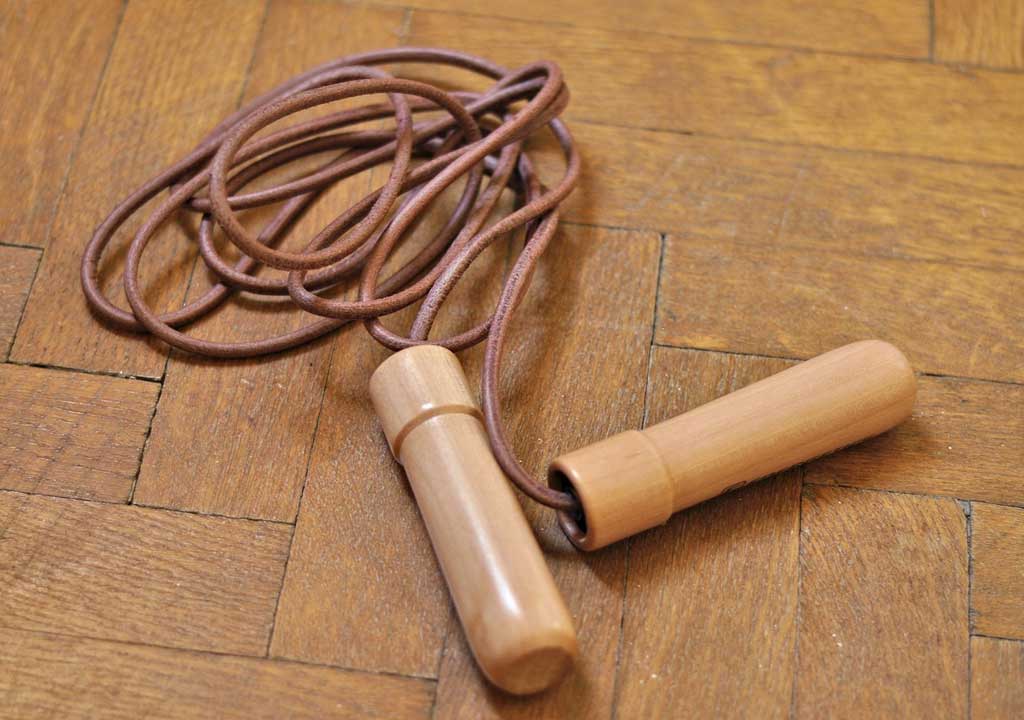
Before you begin, set up a practical and sustainable environment. A basic speed rope (slick, light, and fast) is great for cadence and speed work, while a beaded rope offers durable feedback on timing and rhythm for beginners. The length of your rope matters; a good rule of thumb is to stand on the middle of the rope and pull the handles upward—ideally, the handles should reach approximately chest height when you stand tall with your shoulders relaxed. If you’re taller or shorter than average, adjust accordingly to ensure the rope clears your feet with each revolution. A flat, non-slip floor (gym rubber, tile with a mat, or a wooden floor) reduces ankle stress and helps you maintain proper foot strike. Comfortable athletic shoes with a supportive midsole are recommended.
Programming notes: this eight-week plan is designed for three workouts per week. You can tweak the days to fit your schedule, but aim to leave at least one rest day between sessions. Begin each workout with a warm-up and finish with a cooldown and light mobility work for hips, ankles, and calves. The plan uses a mix of steady-state ropes, intervals, and agility-based drills to target both endurance and quickness.
Phase 1: Foundation and technique (Weeks 1–2)
The first two weeks emphasize mastering technique, establishing a comfortable cadence, and creating a baseline of endurance without sacrificing form. Your focus is to develop a smooth, circular wrist action, light springs off the toes, and a minimal vertical bounce to reduce impact. Even when you’re shorter on time, this phase ensures you’re building from a solid technical foundation, which pays off later when the work density increases.
Goals for Phase 1
- Learn or refine the basic jump: light bounce, smooth wrists, elbows relaxed, feet nearly together with a soft landing.
- Establish a sustainable cadence around a moderate pace that you can hold for 1–2 minutes with good form.
- Introduce simple drills that build proprioception and rhythm without overwhelming intensity.
- Build a yearly habit: three sessions per week, each around 20–25 minutes total time.
Weekly blueprint for Weeks 1–2
Each session starts with a 5-minute general warm-up (joint rotations, light cardio like marching in place, dynamic leg swings) and ends with a 5-minute cooldown (walking, light stretching). Aim for 3 rounds of the following, with 60–90 seconds rest between rounds if needed. As you improve, reduce rest gradually to keep the intensity steady.
Week 1, Session A (approx. 22–25 minutes)
1) Basic bounce: 1 minute continuous
2) Rest: 45–60 seconds
3) Alternate-foot step (like jogging in place with rope): 1 minute
4) Rest: 60 seconds
5) Side-to-side (taps or small lateral hops with rope swing): 45 seconds
6) Rest: 60–90 seconds
7) 2 rounds of 1-minute basic bounce + 30 seconds easy jog in place (with rope inactive), repeat once
Week 1, Session B (approx. 22–25 minutes)
1) Basic bounce: 1 minute
2) 45 seconds rest
3) Forward/backward shimmy with rope (small steps forward then back): 1 minute
4) 60 seconds rest
5) Single-leg hop, switch feet after 30 seconds (alternate if balance is limited): 30–45 seconds per leg
6) Rest: 60 seconds
7) 2 rounds of 1 minute basic bounce + 30 seconds cross-arm drill (hands near hips, rope crosses behind)**
Week 2, Session C (approx. 23–26 minutes)
1) Quick bounce: 1 minute
2) Rest: 60 seconds
3) Double-unders introduction (optional): 15–30 seconds or skip if technique isn’t clean
4) Rest: 60 seconds
5) 2–3 rounds of 40–50 seconds continuous basic bounce with 20–30 seconds rest
6) Mobility finish: ankle circles, calf stretches, hip openers for 5 minutes
Phase 2: Endurance building (Weeks 3–4)
With a solid foundation, Phase 2 expands endurance while maintaining technique. Cadence remains important, but you’ll aim to sustain effort for longer blocks and introduce longer intervals with short recoveries. The goal is to be able to hold a steady pace for 8–12 minutes cumulatively without sacrificing form. You’ll also begin to accumulate more total work, preparing your body for the higher demands of Phase 3.
Phase 2 goals
- Increase continuous jump time while preserving form and cadence.
- Introduce longer interval blocks (e.g., several rounds of 2–3 minutes with brief rests).
- Maintain a controlled breathing rhythm and light sweat without pushing to failure.
- Keep three sessions per week, but consider one longer session if you want to work up to 30 minutes total time per session.
Weekly blueprint for Weeks 3–4
Week 3, Session A (approx. 28–32 minutes)
1) Warm-up: 5 minutes of mobility and light cardio
2) 4 rounds of 2 minutes basic bounce + 1-minute rest
3) 2 rounds of 1.5 minutes alternate-foot step + 45 seconds rest
4) 2-minute cool-down jog or walk with rope in hand for practice near the end
Week 3, Session B (approx. 26–34 minutes)
1) 5-minute warm-up
2) 3 rounds of 3 minutes basic bounce with 90 seconds rest
3) 4 x 30-second fast bursts with 30-second easy pace between bursts
4) 5-minute cooldown and gentle mobility
Week 4, Session C (approx. 30–38 minutes)
1) Warm-up: 5 minutes
2) Continuous block: 6–8 minutes of steady basic bounce at a comfortable, sustainable pace
3) Intervals: 6 rounds of 45 seconds on, 45 seconds off at a slightly faster cadence
4) Cooldown and mobility: 5–7 minutes
Phase 3: Agility and multidirectional drills (Weeks 5–6)
Phase 3 shifts from steady endurance toward agility and multi-directional control. You’ll introduce lateral movements, quick direction changes, and rhythm variations. The aim is to maintain endurance while improving the ability to respond to quick cues—skills that transfer to many sports and daily activities. Expect a higher demand on your calves, ankles, and hip flexors. Good form and a controlled pace remain essential.
Phase 3 goals
- Incorporate lateral and diagonal jumps to challenge balance and foot speed.
- Introduce short bursts of high cadence to improve neuromuscular responsiveness.
- Keep total volume in a manageable range while focusing on quality and precision.
- Develop a broader skill set that makes jump rope sessions more fun and functional.
Weekly blueprint for Weeks 5–6
Week 5, Session A (approx. 30–40 minutes)
1) Warm-up: 6–8 minutes (joint mobility, leg swings, light jog)
2) Lateral jumps: 4 rounds of 20 seconds each side with 40 seconds rest
3) Forward/backward crossover steps: 6 rounds of 20 seconds work, 40 seconds rest
4) 2 rounds of 2 minutes basic bounce with 60 seconds rest
5) Cooldown: 5–7 minutes
Week 5, Session B (approx. 28–38 minutes)
1) Warm-up: 5–7 minutes
2) High-cadence intervals: 8 rounds of 20 seconds at fast cadence with 40 seconds rest
3) Side-to-side shift with rope: 4 rounds of 30 seconds each direction
4) 3–4 rounds of 1.5 minutes continuous bounce with 60 seconds rest
5) Cooldown and mobility: 5–7 minutes
Week 6, Session C (approx. 32–42 minutes)
1) Warm-up: 6 minutes
2) Complex pattern practice: 4 rounds of 1 minute basic bounce + 30 seconds cross-arm pattern + 30 seconds rest
3) 6 rounds of 40 seconds fast cadence with 50 seconds recovery
4) 5-minute continuous light-slow rope to finish, focusing on technique
5) Cooldown
Phase 4: Power, speed, and maintenance (Weeks 7–8)
In the final phase, you’ll combine endurance and agility with higher intensity to maximize power, speed, and efficiency. The workouts are designed to be shorter in total time than Phase 2, but they’re more intense per minute. You’ll push your anaerobic system, sharpen your timing, and develop the resilience to sustain high-quality movement for longer periods. The emphasis remains technique-first; you’ll shorten rest when you can maintain form and cadence.
Phase 4 goals
- Improve peak cadence and power transfer through efficient wrist action and ankle drive.
- Develop the ability to perform fast bursts with precise control.
- Maintain endurance while performing agility sequences with short rests.
- Introduce light competition-like elements (timed rounds, patterns) to boost motivation.
Weekly blueprint for Weeks 7–8
Week 7, Session A (approx. 28–34 minutes)
1) Warm-up: 6 minutes
2) 6 rounds of 20 seconds max effort sprint-style jumps with 40 seconds rest
3) 4 rounds of 30 seconds lateral jumps, 30 seconds rest
4) 3 rounds of 1 minute easy bounce to recover and consolidate technique
Week 7, Session B (approx. 25–33 minutes)
1) Warm-up: 5–7 minutes
2) 8 rounds of 15 seconds high cadence with 45 seconds rest
3) 4 rounds of 1 minute 45-second steady bounce with 60-second rests
4) 5-minute cooldown and mobility focused on calves and hip flexors
Week 8, Session C (approx. 30–40 minutes)
1) Warm-up: 6 minutes
2) Mixed pattern circuit: 4 rounds of (40 seconds fast bounce + 20 seconds cross-arm + 40 seconds side-to-side) with 60 seconds rest
3) 2 rounds of 3 minutes continuous bounce at moderate intensity, focusing on perfect form
4) Cooldown and mobility: 6–8 minutes
Progress tracking and metrics
To stay motivated and accurate about improvements, track several indicators. You don’t need a fancy device; a simple notebook or a notes app works well. Consider the following:
- Consistency: number of workouts completed per week and per phase.
- Cadence clarity: the pace you can maintain without sacrificing form. If you can’t maintain a clean rhythm, dial back the tempo slightly.
- Time on feet: total time spent jumping per session and per week; aim for steady increases as you advance through phases.
- Duration of continuous rope work: the longest uninterrupted block you can perform with good technique.
- Skill milestones: mastering a new drill (e.g., side-to-side, cross-arm, or a controlled double-under) within the target phase.
Technique tips: common mistakes and fixes
Even with a well-structured plan, technique issues can hold you back. Here are some common mistakes and practical fixes:
- Jumping too high: aim for a light, almost no- bounce. Your feet should be barely off the ground, with controlled landings to reduce joint stress.
- Using too much arm action: rely on wrist motion to rotate the rope. The arms should “guide” the rope, not swing wide like a jump rope with heavy arms.
- Hitting the feet: ensure the rope clears the toes by adjusting length and cadence. Shorter rope or faster cadence can help with clearance.
- Rigid posture: keep a tall spine, slight knee bend, and hips stacked over the ankles. This improves balance and reduces fatigue in the lower back.
- Improper footwork during drills: for lateral and multidirectional jumps, practice slowly at first, then gradually increase speed while maintaining control.
Recovery, mobility, and injury prevention
Recovery matters as much as the work itself. Jump rope imposes repetitive stress on calves, Achilles tendons, shins, and knees. Plan recovery as part of your training, not an afterthought. Include the following in your routine:
- Dynamic warm-ups before each session that activate the ankles, calves, and hips.
- Post-workout stretching focusing on calves, hip flexors, hamstrings, and quadriceps.
- Mobility work for ankles and ankles stability drills (e.g., ankle alphabet, calf raises with a pause, ankle circles).
- Quality sleep, hydration, and a balanced diet to support recovery and energy needs.
- Progressive loading: if you feel heavy-legged during a session, reduce volume or pace and focus on form before attempting to increase intensity again.
Putting it all together: a sample eight-week calendar
Here is a practical, calendar-style overview to help you plan your weeks. You can adjust days to fit your schedule while preserving at least one rest day between sessions. Each week includes three jump rope sessions plus optional mobility work on non-training days if you feel energetic.
- Weeks 1–2 (Foundation & Technique): 3 sessions/week; focus on form and light endurance. Total weekly jump time around 60–90 minutes.
- Weeks 3–4 (Endurance Building): 3 sessions/week; longer blocks and intervals. Total weekly jump time around 90–120 minutes.
- Weeks 5–6 (Agility Drills): 3 sessions/week; multidirectional drills and faster cadences. Total weekly jump time around 90–120 minutes.
- Weeks 7–8 (Power, Speed, Mastery): 3 sessions/week; peak cadences and combined patterns. Total weekly jump time around 90–110 minutes.
Sample workout calendar (printable-friendly)
Week 1
Mon: Session A + mobility
Wed: Session B + mobility
Sat: Session C + mobility
Week 2
Mon: Session A
Wed: Session B
Sat: Session C
Week 3
Mon: Session A (Endurance) + mobility
Wed: Session B (Endurance) + mobility
Sat: Optional light mobility or a technical drill-only session
Week 4
Mon: Session C (Endurance)
Wed: Session A (Endurance)
Sat: Session B (Endurance)
Week 5
Mon: Session A (Agility)
Wed: Session B (Agility)
Sat: Session C (Agility)
Week 6
Mon: Session A (Agility)
Wed: Session B (Agility)
Sat: Session C (Agility)
Week 7
Mon: Phase 4, Session A
Wed: Phase 4, Session B
Sat: Phase 4, Session C
Week 8
Mon: Phase 4, Session A
Wed: Phase 4, Session B
Sat: Phase 4, Session C
Safety considerations and adjustments
Listen to your body. If you experience sharp pain, persistent discomfort, or swelling, back off and consult a medical professional if necessary. Start at a level you can tolerate and gradually increase the volume, pace, or complexity. If you’re recovering from a lower-leg injury, you may want to favor low-impact alternatives or reduce jump height while focusing on form. If you have knee or ankle instability, consult a trainer or physical therapist for modifications and stability-enhancing drills tailored to you.
Variations and progression ideas
As you advance through the eight weeks, you can customize the plan to suit your sport or personal interest. Here are some scalable ideas to keep progress going after Week 8:
- Double-unders: Add a few double-unders to the workout when technique is clean and you’re comfortable with the rope’s rhythm. Start with 2–4 reps and build gradually.
- Tempo blocks: Implement tempo-based intervals (e.g., 20 seconds fast, 40 seconds moderate) to refine control under varied paces.
- Pattern complexity: Add multi-pattern blocks that combine basic bounce, alternates, side-to-side, and cross-arm patterns into a single circuit.
- Time-under-tension: Increase hold times for certain patterns (e.g., 90 seconds of continuous basic bounce) to improve muscular endurance.
- Competition-style rounds: Time yourself on a set pattern and aim for continuous improvement week over week.
Nutrition and fueling for jump rope training
Endurance and agility workouts rely on a combination of carbohydrates for quick energy and protein for muscle repair. In the days around your workouts, focus on balanced meals with color-rich vegetables, lean proteins, whole grains, and healthy fats. Hydration is essential, especially in longer sessions. Consider a light snack containing carbs and a little protein about 30–60 minutes before training (e.g., a banana with peanut butter, yogurt with fruit, or a small smoothie) if you train intensely or for longer blocks. After training, a mix of protein and carbohydrates can help with recovery as well.
Conclusion: your eight-week path to stronger endurance and sharper agility
With patience, consistency, and a clear progression, jump rope training can transform your cardiovascular fitness while boosting agility and coordination. The eight-week plan above starts gently, emphasizing technique and steady endurance gains, then gradually ramps up to multidirectional drills and higher intensities. By the end, you’ll have a well-rounded toolkit: the ability to sustain longer efforts with a relaxed form, and the speed and footwork to navigate quick changes in direction. The beauty of this plan is its simplicity and scalability—it fits into busy schedules, travels well, and can be adjusted as you advance. So grab a rope, set aside a comfortable space, and begin your journey toward improved endurance and agility today.
LIKED THIS ARTICLE? SHARE IT: