




















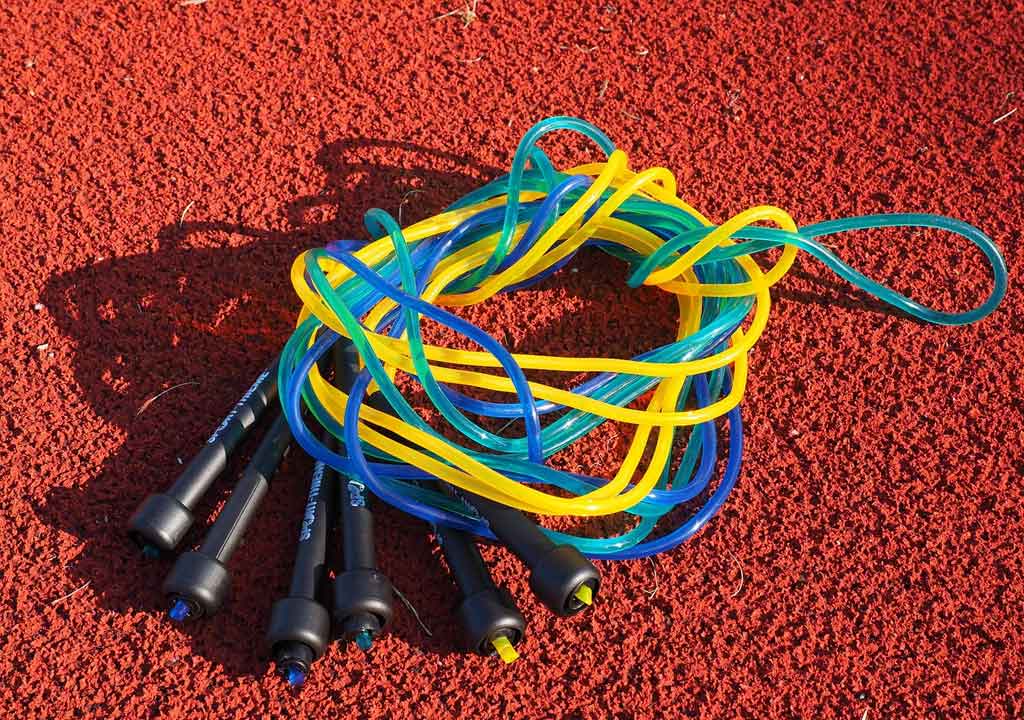
Wrist-Driven Jump Rope Technique: Smooth, Efficient Revolutions

Wrist-Driven Jump Rope Technique: Smooth, Efficient Revolutions
The jump rope is one of the simplest, oldest, and most effective tools for conditioning. When you add a wrist-driven technique to it—a method that emphasizes the wrists as the primary drivers of rope rotation—you unlock a level of efficiency and rhythm that can transform your workouts. This approach minimizes bulky arm movements, reduces fatigue, and lets you maintain speed and control for longer sequences. If you’ve struggled with rope tangles, inconsistent revolutions, or shoulder soreness after a session, a wrist-centered method may be exactly what you need. In this guide, we’ll explore the why, the how, and the practical drills to help you master smooth, efficient revolutions.
Why a Wrist-Driven Approach?
Most beginner jumpers instinctively use their entire arms to swing the rope, which can lead to wasted energy and a stiff, jerky rhythm. As you accumulate reps, you may notice your forearms burn, your shoulders tighten, and your rope speed waver. A wrist-driven approach shifts the focus from the shoulder and elbow to the wrists and forearms, trading brute torque for precise, controlled rotations. The benefits are tangible:
- Higher RPM without joint strain, allowing you to sustain sets longer.
- Cleaner, tighter revolutions with fewer tangles and misreads.
- Improved rhythm and timing, making tricks like double unders or crisscrosses more achievable.
- Better fatigue management, since smaller, efficient motions conserve energy.
It’s important to note: a wrist-driven technique doesn’t mean “no arm movement.” Your arms still play a role as stabilizers and as anchors for your wrists to work within. The key is to keep the motion centered at the wrist joint, with the forearm translating that motion into a smooth, circular rope path.
Understanding the Mechanics: Muscles, Levers, and Axes
To build a robust wrist-driven technique, a quick primer on the mechanics helps. The rope is the lever, your body is the anchor, and the wrist acts as the primary actuator. The rotary motion you want comes from the small, rapid rotations of the forearm and wrist, transmitted through a cable or rope that spins around your body in a consistent plane. Several muscle groups contribute:
- Wrist flexors and extensors provide the primary torque. The flexors (on the palm side) help with wrist flexion during the pull, while the extensors (on the back side) resist overextension and stabilize the motion.
- Forearm pronators and supinators manage the twist and control the rope’s axis. Subtle pronation and supination keep the rope’s loop aligned with your hand path.
- Forearm brachioradialis and brachialis contribute to smooth, resilient rotation without overt elbow movement.
- Shoulder stabilizers—the rotator cuff and scapular stabilizers—play a supportive role. They keep the posture upright and prevent the wrists from compensating with shoulder shifts.
- Grip and finger engagement affect rope tension. A relaxed, steady grip reduces unnecessary tension that translates into stiff wrists.
The goal isn’t to isolate a single muscle group, but to coordinate a small, precise sequence of actions: anchor, flex/extend the wrist ever so slightly, rotate, then return to the neutral position as the rope passes overhead. In practice, most of the power comes from a quick, nimble wrist snap, not a giant elbow drive. With practice, your wrists will learn to “feel” the rope’s path and adjust for rope length, rope weight, and your pace.
Stance, Posture, and Rope Length: Setting the Stage
Before you begin wrist-driven rotations, lay a solid foundation. The setup influences your range of motion, scalability, and even the feel of the rope canceling out tangles.
- Stance: Stand with feet about hip-width apart. Slight knee bend, tall chest, and a neutral spine. Let your shoulders rest down and away from your ears. This posture keeps your ribcage open for smooth breathing during fast sequences.
- Body alignment: Keep your torso square to the rope’s path. Do not twist at the hips or lean excessively forward or back. A compact, stable frame means your wrists can move freely without compensations from the rest of the body.
- Arm position: Let your elbows hover lightly near your sides, with forearms angled slightly forward. The wrists are the main actuators; the elbows should feel relaxed, not locked or tense.
- Rope length: A rope that’s too long requires bigger arm arcs, which defeats the purpose. A good baseline: when the handles touch your armpits with your arms at your sides, you should be able to swing a comfortable, small circle. If you’re tall or long-armed, you may need a slightly shorter rope; if you’re short or compact, a longer rope can still work, but you may want to limit the arc by focusing on wrist rotation.
Rope selection matters too. A speed rope (thin cable with small, smooth bearings) responds quickly to wrist inputs and is ideal for mastering the technique. A heavier rope or a rope with larger handles can be useful for building grip or shoulder endurance, but it makes the wrist work more challenging and can mask the subtlety of wrist-driven revolutions. Start with a light, fast rope as you learn, then experiment with other types as your control improves.
Warm-Up: Preparing the Wrists, Forearms, and Shoulders
Like any technical skill, wrist-driven jump rope benefits from a thorough warm-up. You want to increase synovial fluid in the joints, activate relevant muscles, and lubricate tendons to reduce friction and stiffness. A brief 8–12 minute warm-up can make a measurable difference in form and consistency.
- Wrist circles: 20–30 seconds in each direction, both flexion-extension and radial-ulnar deviation. This primes the joint for quick rotations.
- Forearm rotations: With elbows tucked, rotate forearms so the palms face up and then down, 15–20 reps per side. This trains the pronation/supination necessary for smooth rope travel.
- Shoulder activation: Light band pulls or isometrics to wake up the scapular stabilizers. Include 10–15 seconds of prone Ys and T’s to prepare posture for sustained reps.
- Lower-body readiness: A short set of bodyweight squats or marching in place helps ensure you can stay upright during longer sets without compensations in your midsection.
Finish with a few slow, controlled rope swings to verify your setup. If you find your rope catching, increase the wrist range slightly or adjust your stance to regain a clean plane.
Step-by-Step: How to Execute Wrist-Driven Revolutions
This sequence emphasizes the cadence and precision of wrist-driven revolutions. Practice first at a comfortable speed, then gradually increase pace as your control improves. Throughout, focus on keeping the elbow relaxed and the wrists doing the work.
- Position and grip: Stand tall, rope behind you, handles at your sides. Grasp the handles with a light, relaxed grip—think “sparrow on a branch” rather than “clenched fist.”
- Initiate with the wrists: From a neutral forearm position, initiate rotation with a crisp but small wrist snap. The forearm should angle slightly as the rope begins to rise, but the elbow remains mostly still.
- Maintain a consistent arc: The rope should travel in a near-horizontal path just in front of your feet. Your wrists drive the rope’s speed; your body stays vertical and erect.
- Footwork and rhythm: Use a light bounce in your ankles to absorb impact. Let the rope pass under your feet with each rotation. The goal is a continuous, fluid rhythm—no stuttering stops or jerky changes in pace.
- Breathing and timing: Inhale through the nose, exhale through the mouth in a steady rhythm. Coordinate breath with the cadence of the rope so you stay relaxed and balanced rather than tense or rushed.
- Progression to tighter loops: As you gain confidence, shorten the arc slightly and increase speed. Small, controlled adjustments beat large, sweeping swings that require more elbow involvement.
A useful mental cue is to imagine the rope looping in a small, precise circle around a point just above your toes. This helps maintain a stable plane and reduces the tendency to raise the rope too high or let it drift behind you.
Drills to Build Wrist-Driven Proficiency
Drills are the best way to ingrain the feel of wrist-driven revolutions. Start with slow, focused practice, then add speed and complexity as your control improves. Here are a dozen drills that map well to the wrist-driven approach.
- Wrist-only rotations: Stand still, elbows tucked, rotate the wrists to swing the rope. Keep forearms quiet. Do 20–30 seconds, then rest. You should feel a clean, finite motion, not an arm-wide swing.
- Slow-mo single-unders: Perform one rotation per revolution at a slow tempo. Feel the rope’s path and your wrist’s role. Increase tempo gradually as control improves.
- Cursor drills: Imagine tracing a small circle in front of you with the rope’s contact point at your feet. This reinforces the idea of a controlled, small arc driven by the wrists.
- Two-fast-then-slow cycles: Alternate 2 fast revolutions with 1 slower one. This helps you feel tempo changes without losing form.
- Alternate foot step-ins: Jump rope with a small, steady cadence and alternate foot placement to avoid overloading any one leg. Keep the wrists moving rhythmically throughout.
- Wall-safe practice: Stand a few feet from a wall. Practice wrist revolutions with minimal arm swing to avoid wall contact. This forces better control and smaller arcs.
- Groove and groove again: Don’t chase speed in the first 30 seconds of a drill. Instead, groove a consistent tempo for a minute, then push the pace for 15–20 seconds before returning to the groove.
- Single-doubles progression: If you can hit smooth singles, begin to hover into short double-under attempts by adding a quicker wrist flick right as the rope passes under your feet.
- Line-and-arc visualization: Visualize the rope traveling in a tight plane directly in front of you. This mental cue supports a compact arc and reduces lateral drift.
- Grip relaxation check: Periodically check your grip. If your fingers are white-knuckled, loosen and reset. A relaxed grip reduces wrist stiffness and improves response time.
- Breath rhythm drill: Sync your breath to your wrist cadence. For example, inhale on one full revolution sequence and exhale on the next. It helps you stay calm when volume or speed increases.
- Cooldown flush: End with light rope swings and gentle wrist stretches to ease the forearm into a recovery state and prevent stiffness the following day.
In practice, you’ll likely mix these drills into short 5–10 minute blocks within a larger session. A good rule is to alternate between technique-focused drills and in-work sets so you can transfer the wrist mechanics into actual workouts.
Common Mistakes and How to Fix Them
Even experienced jumpers can drift toward habits that undermine wrist-driven efficiency. Here are the most common issues and practical fixes.
- Using the elbow as the main driver: If you feel your elbow lifting or your arm making broad circles, you’re relying too much on the shoulder. Solution: reset to a relaxed elbow and emphasize the wrist’s small, rapid circles.
- Over-rotation or too-high arc: A big elbow swing often accompanies a high rope arc. Keep it low and tight. Use wrist feedback to keep the rope traveling a few inches above the ground.
- Palm-facing-the-body grip: A grip that collapses the wrist often causes stiffness. Keep the grip light and neutral to encourage natural forearm rotation.
- Too-tight grip or finger flexion: Tense fingers pull on the rope and create friction. Relax the grip, and let the rope roll through the fingers instead of gripping tightly.
- Inconsistent rope length during a session: If you adjust length mid-session, you’ll disrupt your rhythm. Set the rope, then adapt your technique to the rope’s path rather than the rope path forcing adaptation.
- Posture collapse under fatigue: When tired, you may round your back or let shoulders hunch. Counteract by doing short resets: stand tall, reset the breath, and re-engage scapular stabilizers.
Addressing these mistakes often yields immediate gains in rhythm and comfort. A few minutes of deliberate, conscious practice focused on one or two fixes at a time can accelerate progress far more than endless routine repetition.
Progression and Programming: Building Endurance, Speed, and Control
To make wrist-driven revolutions a durable skill, you need a simple, progressive plan. The idea is to start with technique and control, then gradually add volume and higher speed as accuracy remains solid. Here’s a practical framework you can adapt to your schedule.
- Foundation week (Days 1–3): Emphasize form. 5–8 minutes of wrist-focused drills, 2–3 sets of 1–2 minutes each, with 1 minute rest between sets. End with 2 minutes of slow, controlled singles.
- Technique-to-tad speed (Days 4–6): Add short, moderate-speed skip sequences. 3–4 sets of 40–60 seconds, with 30 seconds rest. Keep arcs small; the focus is control, not pace.
- Endurance week (Days 7–9): Increase total volume. 4–6 sets of 1–2 minutes, with 30–60 seconds rest. Use a slightly longer rope if comfortable, but intentionally keep the wrists driving the action.
- Speed-integrated week (Days 10–12): Introduce tempo shifts and light double-under attempts. 5 sets of 30–45 seconds at a brisk pace, then 15 seconds at a very slow pace, and 15 seconds back to brisk pace. Keep wrists active throughout.
- Maintenance week (Day 13 and beyond): 2–3 sessions per week, 10–20 minutes total, with a balance of wrist drills and 2–3 short rounds of singles or light doubles. This maintains technique while preserving joints and tendons.
If you’re pressed for time, you can compress the above into a two-week cycle: Week 1 emphasizes technique and form, Week 2 adds controlled volume and moderate pace. The key is consistency and mindful practice. It’s better to perform fewer reps with clean mechanics than to pile up reps that train bad habits and tension.
Sample 2-Week Plan for Wrist-Driven Mastery
Use this as a simple template to integrate into a broader training routine. Adapt the duration to your schedule and fitness level.
: - Day 1: 8 minutes technique, 4 rounds of 20-second wrist drills with 20 seconds rest, cooldown 3 minutes
- Day 2: 6 minutes technique, 3 rounds of 40-second singles, 20 seconds rest
- Day 3: Rest or light mobility work
- Day 4: 9 minutes technique + 3 rounds of 25-second wrists at a moderate pace
- Day 5: 5 minutes cooldown + 2–3 sets of 60 seconds dedicated to wrist-driven pace
- Day 6–7: Rest or active recovery
: - Day 8: 8 minutes wrist drills, 6 rounds of 30 seconds at a steady tempo
- Day 9: 10 minutes mixed: 3 rounds singles, 3 rounds faster tempo, total 6–7 minutes
- Day 10: Rest
- Day 11: 4 rounds of 40 seconds wrist-driven sequences, 20 seconds rest
- Day 12: 8 minutes technique + 2 rounds of 60 seconds at brisk but controlled pace
- Day 13–14: Rest or light mobility
Adjust the plan based on how your wrists, forearms, and shoulders feel. If you experience pain, dial back volume and smoothness before increasing intensity. The aim is to cultivate a sustainable habit, not to push through pain for a pump.
Safety, Recovery, and Longevity
A wrist-driven jump rope routine is generally safe, but like any kinetic skill, it carries risk if pushed too hard or practiced with poor form. Here are key safety tips to protect your joints and tendons.
- Warm up prior to high-volume sessions and rewarm after intense efforts. A cold start can aggravate tendons and ligaments.
- Listen to your body: Pain is a signal. If you feel sharp or persistent pain in the wrist, forearm, or elbow, pause, rest, and seek guidance if needed.
- Surface matters: Jump on a forgiving surface if possible to reduce impact on the feet and ankles, which indirectly affects the wrists through posture and grip.
- Progress gradually: Let tempo and volume ramp up slowly. The wrists adapt to higher speed and endurance over weeks, not days.
- Stretch and mobility: Incorporate gentle wrist and forearm stretches post-workout, focusing on flexors, extensors, and the pronator/supinator group to maintain range of motion.
If you’re new to exercise or have a history of wrist issues, consider consulting with a physical therapist or certified trainer before substantial changes to your routine. A personalized plan can reduce risk and tailor the wrist-driven method to your biomechanics.
Equipment and Environment: What Helps Most
While technique is the star, the right equipment can make practice more efficient and enjoyable.
- : A lightweight speed rope with smooth bearings is ideal for wrist-driven work. It responds quickly to small wrist motions and helps you feel the accuracy of your path.
- : Grippy, comfortable handles that don’t force a fixed grip are preferable. If the handles are too heavy, your arms may tire faster, shifting emphasis from wrists to arms.
- : A flat, even surface helps you maintain a consistent arc and reduces tripping risk. A mat can be helpful on hard floors to cushion landings during longer sessions.
As you grow more confident, you can experiment with different rope lengths or even weighted ropes for grip and forearm strength. Just ensure your form remains solid as you introduce new variables.
Frequently Asked Questions
Below are common questions about wrist-driven jump rope technique, with concise answers to help you troubleshoot.
- Q: Do I need to be strong in the forearms to use a wrist-driven technique?
A: While stronger forearms can help, especially for long sessions, the method prioritizes technique and wrist control. Start with lighter volumes and focus on a clean, relaxed wrist motion. Strength will build over time with consistent practice. - Q: Can I learn wrist-driven technique with a regular rope?
A: Yes, but a speed rope will respond more readily to small wrist inputs. If you’re using a heavier rope, you may need to focus more on technique and less on speed until you adapt. - Q: How long before I see improvements?
A: Many people notice smoother revolutions within a few weeks of consistent practice. Double unders and more complex tricks often take longer but benefit greatly from the refined wrist motion. - Q: Is it okay to combine this with other jump rope styles?
A: Absolutely. You can integrate wrist-driven rounds with tempo sets, basic singles, or basic doubles. The key is to maintain proper form during wrist-driven reps and avoid crashing into old habits. - Q: What should I do if I experience wrist soreness?
A: First, reduce volume and ensure your form is correct. If soreness persists, rest and consider seeking guidance. In many cases, adjusting rope length, grip, and arc size resolves mild soreness.
Conclusion: The Flow of Lightness and Precision
Mastering wrist-driven revolutions is a journey toward lighter, more economical movement. It’s about learning to trust the wrists as the primary engines of rope rotation, while the rest of the body serves as a steady framework. When done well, this approach yields a cadence that feels effortless, even at higher speeds. You’ll find that your rope stays under your control, your breathing stays calm, and your posture remains upright as you loop through sets of single-unders, doubles, and increasingly complex sequences.
To start you on that path, return to the fundamentals: stance and posture, rope length selection, relaxed grip, and small, deliberate wrist motions. Practice the drills with purpose, not hurry. Track your improvements in smoothness, consistency, and the speed you can sustain without losing form. Over time, your revolutions will become a quiet, rhythmic cascade—a classic example of how small, precise motions, when repeated with intention, generate big results.
Final Thoughts: Embrace the Quiet Power of the Wrist
The wrist-driven jump rope technique isn’t a flashy gimmick; it’s a refined skill that unlocks control, efficiency, and longevity in your jump rope journey. By aligning your mechanics with the natural function of the wrist and forearm, you create a sustainable pattern that scales from easy daily cardio to challenging skill sequences. The beauty is in the consistency: the same effortless revolutions, day after day, season after season.
If you’re ready to start, set aside 10–15 minutes for your first wrist-driven session this week. Focus on a relaxed grip, a small arc, and a steady wrist snap. From there, you’ll gradually broaden your range, heighten your speed, and enjoy more fluid, efficient revolutions with every session.
LIKED THIS ARTICLE? SHARE IT: